



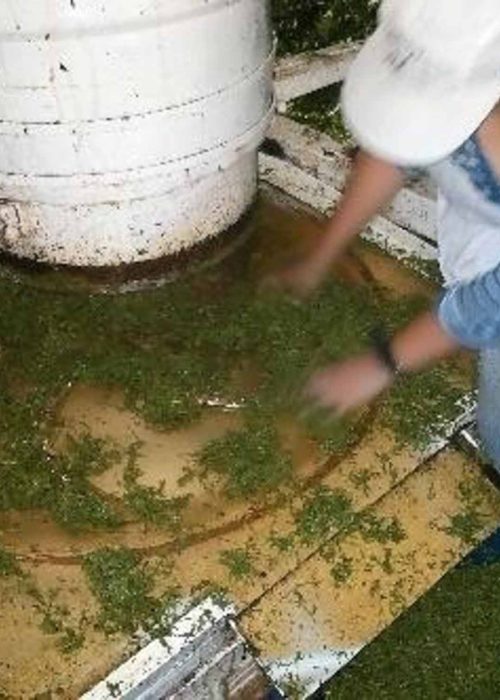


Peruvian Tea, a Legendary Experience
What is it about?
Located in the mystical Andean-Amazonian corridor of the district of Huayopata, province of La Convención, this volunteer project offers a unique agroecological and cultural immersion into the Peruvian tea (Camellia sinensis) value chain — a crop with centuries-old roots in this area.
The program integrates volunteers into sustainable farming tasks, artisanal processing, and the formulation of innovative products, while connecting them with the living Andean worldview: an ancestral heritage that honors the Pachamama (Mother Earth), ayni (collective work), and harmony with natural elements.
Participants will be actively involved at Yanayaco Tea Farm, a space of cultural and biological conservation that is part of the ancient Tea Route, on the way to Machu Picchu. This experience merges Inca spirituality, agroforestry knowledge, and regenerative agriculture in a region that still preserves millennia-old practices linked to the Andean agricultural calendar and respect for the Apus (sacred mountain spirits).
Operational site
Yanayaco Tea Farm — Project Director: J. Germán Povea Arredondo
- Start Dates: Flexible Dates
- Minimum Duration: 4 weeks
- Recommended age: 17 or more


Location
- Region: Cusco
- Province: La Convención
- District: Huayopata
Reference
Strategically located between the cloud forest and the Andes, Huayopata was historically a corridor of exchange between the coast, highlands, and jungle, and formed part of the logistical and spiritual routes of the Tahuantinsuyo empire. Today, the district preserves unique microclimates ideal for the organic production of tea, cacao, herbs, and exotic fruits in a highly biodiverse environment.
Tea cultivation in Huayopata began in 1913 with seeds from Japan, and later flourished thanks to experts from Ceylon (now Sri Lanka), making the area Peru’s leading tea producer by the mid-20th century. Today, through reactivation efforts at Yanayaco, we seek to restore its productive, cultural, and symbolic value by promoting an integrated agroecological model.
- Recover and revalue Huayopata’s tea-growing tradition through agroecological practices with regenerative and ancestral approaches.
- Build local and external capacities through knowledge-sharing on cultivation techniques, drying, blend formulation, sustainable packaging, and marketing.
- Integrate experiential and mystical tourism with agriculture, transforming the valley into an agro-spiritual tourism destination based on authentic, sustainable, and meaningful experiences.
- Foster the integration of modern science with traditional Andean knowledge, particularly in phytotherapy, natural fermentation, biodynamics, and the ritual use of plants.
- Reactivation of tea cultivation as a driver of local economic development.
- Strengthening of Huayopata’s cultural and agricultural identity.
- Empowerment of local producers and rural youth.
- Attraction of international volunteers committed to sustainability, Andean mysticism, and agroforestry learning.
- Preservation of the natural environment by promoting agroecological and biodiverse corridors.
- Integration of “Andean Tea” into national and international markets with an authentic origin story.
- Intensive mode: 4 weeks / 30 days
- Flexibility: The program can be adapted to the volunteer’s arrival date.
- Agricultural calendar: Participation is recommended between April and November to coincide with key cultivation and processing stages.
Initial agricultural kit (provided by the team):
- Camellia sinensis seeds and native companion species (lemongrass, muña, ginger, mint)
- Certified organic fertilizers (compost, worm humus, bioferments)
- Hand tools and gravity-fed irrigation system
- Technical manuals and agroecological management plan
- Local technical coordination and guidance
- Weekly reports and final systematization
- Education or interest in agroecology, permaculture, agronomy, environmental sciences, phytotherapy, or sustainable tourism.
- Good physical and emotional condition for manual fieldwork.
- Ability to adapt to rural, intercultural environments with limited access to urban services.
- Basic Spanish recommended (A2 level).
- Mandatory international health insurance.
- Accommodation on the farm (shared or individual room, subject to availability).
- Full meals (3 daily meals with local products).
- Orientation and welcome by the technical and cultural team.
- Participation in traditional Pachamama thanksgiving rituals.
- Workshops and training on agroecology, tea history, Andean spirituality, medicinal plants, and ancestral cooking.
- Ongoing supervision and flexible schedules.
- Suggestions for weekend activities:
- Hikes to waterfalls, archaeological sites, and Andean-Amazonian viewpoints.
- Guided visits to tea, coffee, or cacao cooperatives.
- Ritual baths, coca leaf readings, and traditional weaving workshops.
“This project is a fusion of land, ancestral knowledge, and the hospitality of the Andean people. More than volunteering, it is an experience of reconnection with nature and the Inca legacy.” — Project Director