



Ecological Experience on an Organic Rainforest Farm
What is it about?
The greatest challenge humanity faces today is the impact of climate change at a global level, surpassing even other critical issues such as the rise in poverty indicators or the current international armed conflicts. While this situation is clearly perceived by all, it is not being adequately addressed by development actors. This is particularly concerning as its effects are not limited to the environmental dimension — they are now strongly affecting the global economy and, with even greater impact, the social dimension, especially for those living in rural areas who depend on self-sustenance based on ancestral knowledge and practices.
Sustainable organic agriculture develops from various ideologies and is rooted in ancestral culture, applying farming methods that produce clean food while respecting and preserving natural ecosystems to the greatest extent possible.
Today, it has been scientifically demonstrated that organic and ecological agriculture is sustainable. Over the long term, it proves viable, helping maintain ecosystems and soil biodiversity, as well as preserving seed biodiversity, the foundation of food production.
Moreover, it is a way of producing a variety of healthy foods and fruits, helping prevent malnutrition and anemia, diseases that affect both children and adults — fully aligned with the Sustainable Development Goals (SDGs).
Operational site
Yomentoato Natural Paradise — Director: Salustio Escobedo Echegaray
- Start Dates: Flexible Dates
- Minimum Duration: 4 weeks
- Recommended age: 17 or more

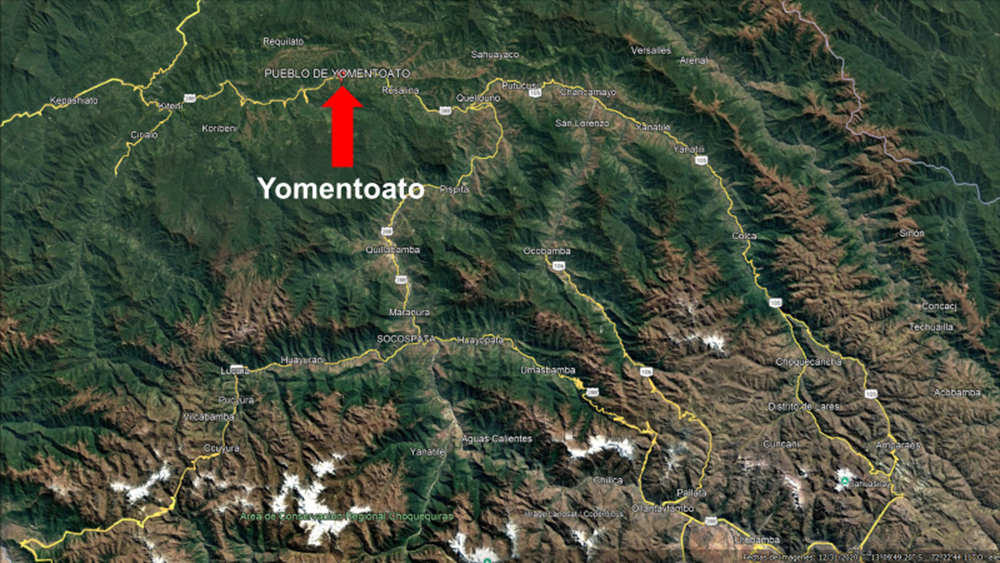
Location
- Region: Cusco
- Province: Echarate
- District: La Convención
Reference
The town of Yomentoato is practically the “gateway” to the territory still inhabited by the native Machiguenga people — an indigenous group that mainly lives in the Amazon region of southeastern Peru, specifically in the departments of Cusco and Madre de Dios. The Machiguenga, also known as Matsigenka, belong to the Arawak linguistic family and are known for their deep connection with nature and their ancestral cultural practices.
Modernity has always presented challenges and opportunities for the Machiguenga people. While it has brought access to basic services and new technologies, it has also disrupted their traditional ways of life, culture, and territory, pushing them deeper into the Amazon rainforest. The overexploitation of natural resources, such as aggressive deforestation and mining, affects both modernized populations and native communities in retreat, limiting their access to food and water sources and undermining their forest-dependent ways of life.
- Conservation and improvement of soil, water, biodiversity, and ecosystem health.
- Reduction of chemical input use and environmental pollution.
- Production of healthy, nutritious, and diverse food.
- Conservation and use of native seeds and local genetic resources.
- Promotion of crop and species diversity.
- Guarantee of food security for local and regional populations.
- Revaluation of the human-nature relationship in the face of climate change and devastating modernity.
- Recovery of agricultural production systems using natural and ancestral practices.
- Protection of people’s health through the promotion of biodiversity and food security.
- Sustainable democratization of production and consumption systems for populations vulnerable to the effects of climate change and its economic repercussions.
30 days (4 weeks, with the itinerary adjusted to the volunteer’s arrival date), distributed between fieldwork and learning agricultural activities as follows:
- 1st week: Coffee
- 2nd week: Cacao
- 3rd week: Citrus fruits
- 4th week: Other tropical rainforest fruits
Cultivation kit:
- Seeds
- Nutrients
- Tools
- Water supply connection and distribution inputs
- Local staff
- Technical guidance and monitoring of the volunteer activity
- Weekly and final reports
- Physical and psychological readiness for agricultural work.
- Adaptation to the actual conditions of local daily life.
- Basic knowledge of the Spanish language.
- The Volunteer must have travel insurance so that we can provide proper assistance through our travel assistance providers.
- Accommodation.
- Three meals per day.
- Transport to and from the airport.
- General orientation provided by staff upon arrival at the project site.
- Equipment and materials for the project.
- Training, workshops, and experiences in collaboration with the project site team.
- Supervision and mentoring for the project.
- Regulation of working hours.
- Support for hygiene and cleaning activities specific to the volunteer.
- Guidance on weekend activities.